
iPhone 17 Prices Could Be Heading Higher: Here’s Why the Global Market Is Watching Apple Closely


If you’ve been planning to buy the iPhone 17, you may want to pay close attention to what’s happening in the global smartphone market.
Over the past few years, Apple has managed to keep the pricing of its iPhone lineup relatively stable in many regions, even as manufacturing costs, inflation, and supply chain challenges continued to increase. While several Android brands revised their prices due to rising component costs, Apple largely maintained its launch pricing strategy.
Now, that situation appears to be changing.
Apple has officially increased iPhone 17 prices in Japan, making it one of the first major markets to see a mid-cycle price revision. At the same time, reports from retailers and the current market situation in India are raising questions about whether a similar move could happen here in the coming weeks or months.
It’s important to clarify one thing before we begin.
Apple has not officially announced any iPhone 17 price increase for India at the time of writing. However, looking at current market trends, increasing production costs, memory shortages, currency fluctuations, and the growing shortage of iPhone 17 stock across many Apple Authorised Resellers in India, industry watchers believe this is a situation worth monitoring closely.
So, why are smartphone prices increasing? Why did Apple revise prices in Japan? And could India be next?
Let’s understand the bigger picture.
Apple Officially Revises iPhone 17 Prices in Japan
The biggest confirmation came from Japan, where Apple officially updated the pricing of the iPhone 17 lineup across its online and retail stores.
The revision wasn’t limited to just one model. Multiple devices in the lineup received price increases, with some variants becoming nearly 10% more expensive than their original launch prices.
For buyers in Japan, this means purchasing an iPhone 17 today costs noticeably more than it did at launch.
While Apple hasn’t publicly shared a detailed explanation for every price revision, analysts point to one major reason — currency fluctuations.
The Japanese Yen has weakened significantly against the US Dollar over the past few years. Since many components, manufacturing costs, and international business transactions are linked to the US Dollar, maintaining the same retail price becomes increasingly difficult when a local currency loses value.
Instead of absorbing those additional costs forever, companies eventually revise prices to balance their operating expenses.
Japan has now become one of the first examples of this strategy.
This Isn’t Happening Only to Apple
If you’ve been following the technology industry closely, you’ll notice that Apple isn’t the only company dealing with rising costs.
Over the past year, several premium smartphones, laptops, and tablets have either launched at higher prices or experienced pricing changes due to increasing manufacturing expenses.
Brands including Samsung, Google, and other major electronics manufacturers are all facing the same challenge.
The reason isn’t simply inflation.
There’s something much bigger happening behind the scenes.
The AI Boom Is Quietly Changing the Smartphone Industry
Artificial Intelligence has become one of the biggest technological revolutions in recent years.
Every major company is investing billions of dollars into AI infrastructure.
Companies like Microsoft, Google, Amazon, Meta, OpenAI, and many others are building enormous AI data centres capable of training and running advanced AI models.
These powerful systems require an enormous amount of high-performance memory chips.
That’s where the problem begins.
The same manufacturers that produce memory chips for smartphones also produce advanced memory used in AI servers.
As demand for AI hardware continues to rise, chip manufacturers are naturally prioritising products that generate higher profits.
This means fewer resources are available for consumer electronics.
Although smartphone production hasn’t stopped, manufacturers are now paying more for essential components such as DRAM and NAND storage.
Those increased costs eventually affect the overall cost of building a smartphone.
Why Memory Chips Matter So Much
Many people think a smartphone’s biggest expense is its processor.
In reality, modern flagship phones contain several expensive components working together.
These include:
- Display panels
- Camera sensors
- Batteries
- Processors
- DRAM memory
- NAND storage
- Wireless communication chips
Among these, memory has become one of the fastest-growing expenses during the AI era.
Every smartphone relies on high-speed memory to run apps smoothly, capture high-resolution photos, process videos, and deliver AI-powered features.
When memory prices rise globally, manufacturers have two choices.
They can either absorb the additional cost and reduce profit margins or pass some of that increase on to consumers.
Initially, many companies chose to absorb the impact.
But that approach cannot continue forever.
Currency Fluctuations Are Also Playing a Major Role
Another important factor affecting smartphone pricing is foreign exchange.
Although smartphones are sold in local currencies like the Indian Rupee or Japanese Yen, many manufacturing and international supply chain costs are settled in US Dollars.
If a country’s currency weakens against the Dollar, importing premium electronics automatically becomes more expensive.
This was one of the biggest reasons behind Apple’s official pricing changes in Japan.
Even if the hardware itself hasn’t changed, fluctuations in exchange rates can force companies to update retail pricing.
It’s a challenge faced by almost every global technology company.
What Does This Mean for India?
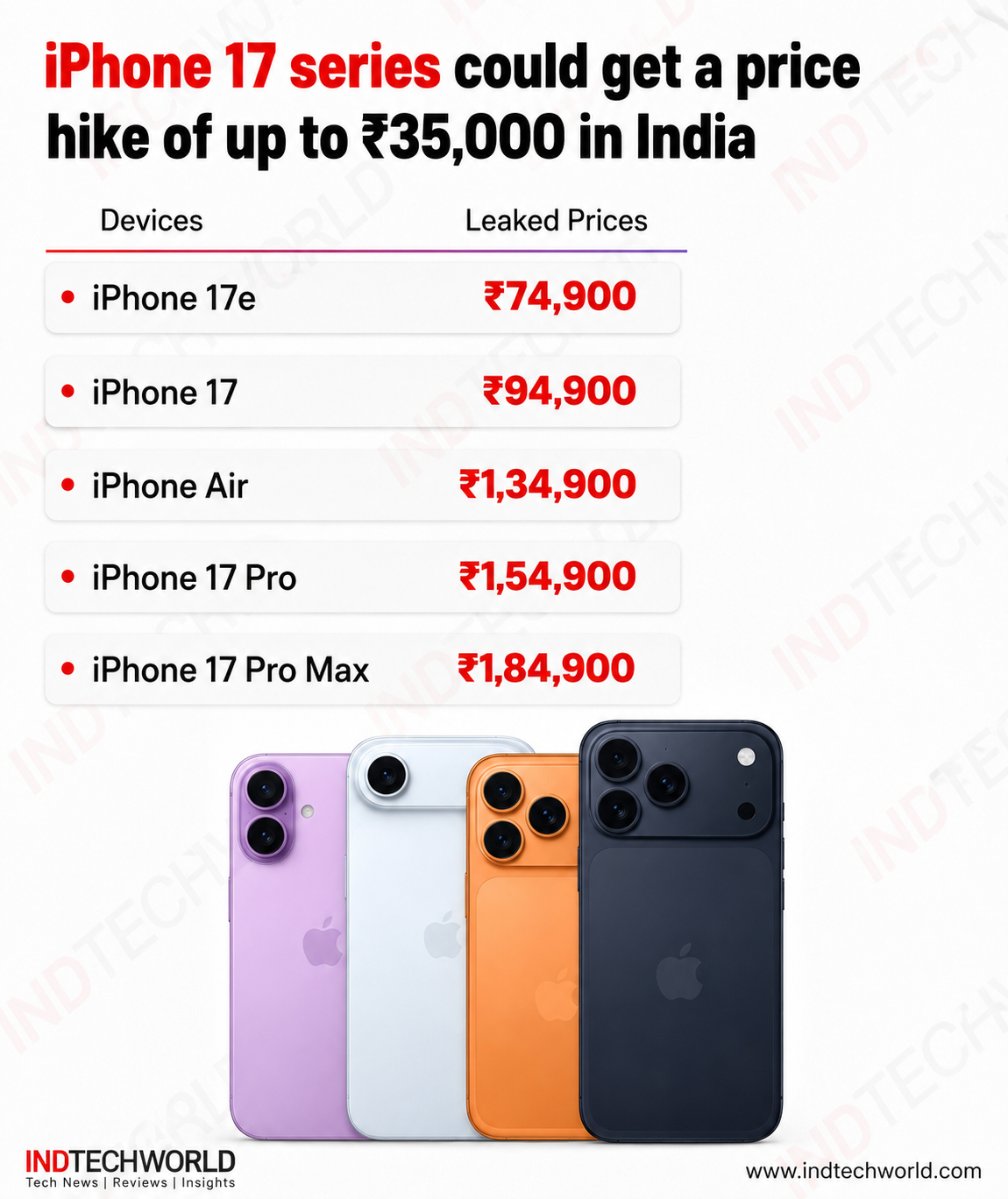
This is the question many buyers are asking today.
Unlike Japan, Apple has not announced any official price revision for India.
However, something interesting has been happening across the Indian retail market.
Over the past few days, many Apple Authorised Resellers and premium retail stores have reported limited availability of the iPhone 17 series.
Several popular colour options and storage variants are already difficult to find.
Some buyers have also noticed “Out of Stock” listings across multiple online and offline channels.
Of course, stock shortages don’t automatically mean prices will increase.
There can be several reasons behind limited availability, including production schedules, shipment delays, strong consumer demand, or inventory management.
However, when stock shortages appear alongside global pricing revisions and rising component costs, they naturally become part of the discussion.
This is exactly why industry analysts are closely watching the Indian market.
Could Prices Increase in India?
At this stage, nobody outside Apple knows the answer with certainty.
What we do know is this:
- Apple has already revised iPhone 17 pricing in Japan.
- Global memory costs remain under pressure due to increasing AI demand.
- Currency fluctuations continue affecting international hardware pricing.
- Many Apple Authorised Resellers in India are currently experiencing limited stock availability.
Taken together, these developments suggest that the possibility of a future price revision cannot be completely ruled out.
However, until Apple makes an official announcement, any discussion about an India price increase should be treated as market analysis rather than confirmation.
Why Is the iPhone 17 Going Out of Stock Across India?
If you’ve recently visited an Apple Authorised Reseller or checked online platforms like Amazon, Flipkart, Imagine, iPlanet, Unicorn, or other premium Apple retailers, you may have noticed something unusual.
Several iPhone 17 variants are currently unavailable, especially the more popular storage options and colours.
While some stores still have limited stock, others are asking customers to wait for fresh inventory.
Naturally, this has sparked one big question among buyers:
Is Apple preparing for a price revision?
The honest answer is—we don’t know yet.
Apple has not confirmed anything officially.
However, stock shortages combined with global pricing changes have certainly caught the attention of the market.
There are several possible reasons why the iPhone 17 is becoming harder to find.
Reason 1: Strong Consumer Demand
Whenever rumours of a possible price increase begin circulating, many customers decide to purchase early instead of waiting.
Nobody wants to pay more for the same product a few weeks later.
This creates what the industry calls “pull-forward demand.”
Instead of buying during festive sales, customers rush to purchase immediately.
As more people buy existing inventory, retailers naturally begin running out of stock much faster than expected.
This doesn’t confirm a price hike, but it does explain why availability suddenly becomes limited.
Reason 2: Supply Chain Adjustments
The smartphone industry works months in advance.
Manufacturers don’t simply produce phones whenever demand increases.
Production depends on component availability, factory schedules, shipping timelines, and distributor planning.
If memory chips, storage components, or other key parts become difficult to source, production can slow down.
This doesn’t necessarily stop manufacturing altogether.
Instead, shipments arrive in smaller batches, creating temporary shortages in different countries.
Reason 3: Transition Between Inventory Cycles
Another possibility is inventory management.
Before introducing new pricing, promotional offers, or revised distribution strategies, companies often clear existing inventory first.
Retailers gradually sell older stock before receiving fresh shipments.
Again, this doesn’t automatically mean Apple will increase prices in India.
It simply explains one of the reasons inventory sometimes disappears before new stock arrives.
Should You Wait for the Festive Season?
This is probably the biggest question for anyone planning to buy an iPhone 17.
Every year, Indian shoppers wait for major sales such as:
- Amazon Great Indian Festival
- Flipkart Big Billion Days
- Bank cashback offers
- Exchange bonuses
Historically, these sales have offered excellent discounts on iPhones.
But this year, the situation looks slightly different.
If global component costs continue rising and Apple decides to revise pricing in additional markets, future discounts may not be as attractive as buyers expect.
For example, even if an online platform advertises a ₹5,000 discount later, it may simply be reducing the price from a newly revised MRP rather than the original launch price.
That’s why many buyers are closely monitoring current pricing before making a decision.
Should You Buy Now or Wait?
There isn’t a single answer that fits everyone.
If you’ve already planned to purchase an iPhone 17 and you find your preferred model available at its current retail price through an authorised seller, buying now could help you avoid uncertainty if pricing changes later.
On the other hand, if you’re not in a hurry and are comfortable waiting, it may be worth seeing how the market develops over the next few weeks.
The key point is this:
Don’t make a decision based only on rumours.
Instead, follow official announcements from Apple and keep an eye on trusted retailers.
What Should Buyers Watch Over the Coming Weeks?
The smartphone market changes quickly, and the next few weeks could provide a clearer picture.
Here are a few things worth watching:
- Any official statement from Apple regarding regional pricing.
- Fresh stock arriving at Apple Authorised Resellers across India.
- Changes in pricing on Apple’s official website.
- Availability of different storage variants and colours.
- Bank offers and exchange deals during upcoming sales.
These indicators will help buyers understand whether the current shortage is temporary or part of a larger pricing adjustment.
The Bigger Picture: Smartphones Are Becoming More Expensive
The discussion around the iPhone 17 isn’t just about one phone.
It’s about how the entire premium smartphone industry is changing.
Artificial intelligence has dramatically increased demand for advanced memory and semiconductor components.
Global supply chains continue facing pressure.
Currencies fluctuate.
Manufacturing costs rise.
Logistics become more expensive.
All these factors eventually influence the price consumers pay.
This isn’t unique to Apple.
Many technology companies are dealing with similar challenges across smartphones, laptops, tablets, and other electronic devices.
As technology becomes more advanced, maintaining the same pricing year after year becomes increasingly difficult.
The official iPhone 17 price revision in Japan clearly shows that Apple is willing to adjust pricing when market conditions require it.
At the same time, limited availability of the iPhone 17 across several Apple Authorised Resellers in India has naturally led to discussions about whether something similar could happen here.
That said, it’s important to separate facts from speculation.
Apple has not officially confirmed any iPhone 17 price increase for India at the time of writing.
However, looking at the current market trends, global component costs, AI-driven memory demand, foreign exchange movements, and ongoing stock shortages, the possibility of future pricing adjustments cannot be completely ignored.
If you’re planning to buy the iPhone 17, this is a good time to keep a close watch on official announcements and retailer inventory.
And if you find your preferred model available at its current price through an authorised seller, it may be worth considering before any future market changes take place.
We’ll continue tracking every development related to the iPhone 17 and update this article if Apple makes any official announcement regarding pricing in India.
Disclaimer
This article is based on Apple’s official pricing update in Japan, current market observations, publicly available industry reports, and stock availability across Apple Authorised Resellers at the time of writing. Apple has not officially confirmed any iPhone 17 price increase for India. Any discussion regarding possible pricing changes is based on current market trends and should not be treated as an official announcement.
